
How to Use Social Proof to Improve Your Business’s Online Marketing
Let’s start with an uncomfortable truth: nobody believes what they read online anymore.
Your website says you’re “committed to excellence.” Likewise, your social media marketing says you’re “trusted by hundreds.” Your digital ads say you’re basically the best thing to happen to humanity since sliced bread. Cool. But here’s the problem — you’re the one saying it. And in online marketing, that’s like grading your own homework.
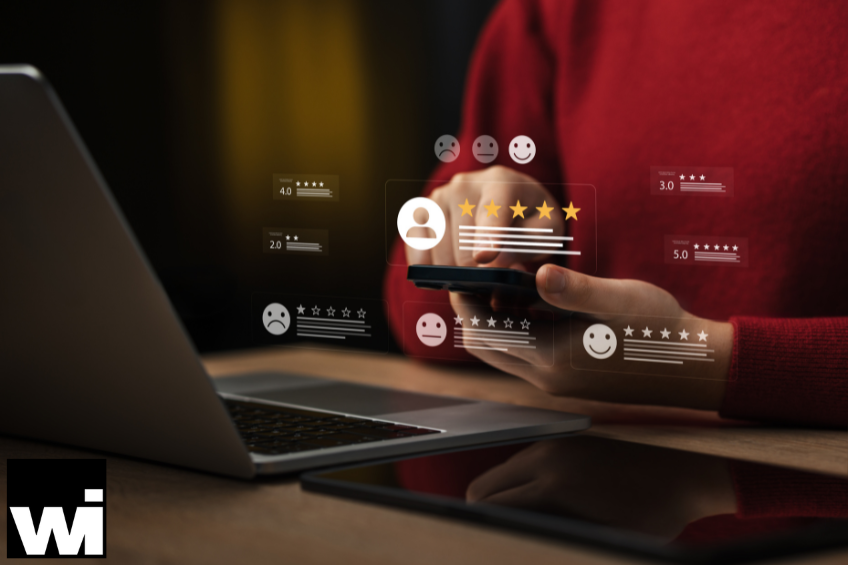
This is where social proof comes in. Social proof is what happens when other people do the bragging for you. Reviews. Testimonials. Photos from real customers. Influencers who actually use your product and don’t look like they’re being held hostage. When potential buyers see other humans trusting you, they relax. Their guard drops. They think, “Alright, maybe this isn’t a scam.”
At Worcester Interactive, we’re a digital marketing company that understands this: attention is nice. Clicks are cute. But trust? Trust closes the deal. And social proof is how you earn it.
What We’ll Cover:
- What is social proof?
- Online reviews
- User-generated content
- Influencer marketing
- Testimonials and case studies
- Brand mentions
- Social proof best practices
- Why social proof needs strategy
- Key takeaways
- Start building social proof today
What Social Proof Actually Is (And Why It Works)
Let’s strip away the buzzwords. Social proof isn’t some advanced marketing sorcery. It’s basic human behavior. When people don’t know what to do, they look at what other people are doing. That’s it. That’s the secret.
Ever pick a restaurant because it had more reviews than the empty one next door? Congratulations — you’ve participated in social proof. In online marketing, it works the same way. If potential customers see others buying from you, reviewing you, tagging you, or talking about you, they assume you’re legit. If they see nothing? That silence gets loud real quick.
And this doesn’t just live in social media marketing. It shows up in testimonials on your website, star ratings in search results, and even in how your digital ads perform. Ads with visible reviews and real customer quotes convert better. Why? Because people trust people. They don’t trust headlines shouting “We’re the best!”
Social proof reduces friction. It lowers skepticism. And in marketing, friction is the thing that quietly kills conversions.
Online Reviews: The Internet’s Word-of-Mouth
Let’s be honest. Before you buy anything online, what do you do? You read the reviews. Everybody does. Five stars? You’re intrigued. Two stars and someone yelling about “terrible customer service”? Suddenly, you’re backing away slowly.
This is where social proof gets real. Online reviews are the modern version of word-of-mouth. Except now it’s not just your neighbor recommending a contractor — it’s 137 strangers on Google giving you a vibe check.
If you care about online marketing, you can’t ignore reviews. Google reviews impact local visibility. They influence click-through rates. They even affect how well your digital ads convert. An ad pointing to a page with zero visible trust signals feels risky. One pointing to a business with 80 strong reviews? Way easier to sell.
And here’s the part businesses avoid: you have to ask for reviews. Consistently. Politely. And when you get them — good or bad — respond like a human. Nothing builds credibility faster than visible engagement.
Reviews aren’t optional anymore. They’re table stakes.
User-Generated Content: Let Customers Do the Talking
Stock photos are fine. Polished brand videos are nice. But you know what people actually trust? Other normal humans.
User-generated content — aka customers posting photos, videos, or tagging your business — is peak social proof. It’s messy, it’s unfiltered, but most of all — it’s real. And real beats polished almost every time. If someone’s considering buying from you, they’d much rather see your product in the hands of an everyday customer than in a staged photoshoot that looks like it cost more than their rent.
This is where social media marketing really shines. When customers tag you, mention you, or post about their experience, that content becomes credibility on autopilot. Share it (with permission), highlight it on your website, and use it in your online marketing campaigns. Yes, even your digital ads perform better when they feature authentic UGC instead of corporate-looking graphics screaming “LIMITED TIME OFFER.”
Encourage it. Create hashtags. Run contests. Ask for photos. The more customers do the talking, the less you have to convince anyone yourself.
LEARN HOW TO REACH MORE CUSTOMERS IN YOUR AREA
Influencer Marketing (Without Being Cringey)
Alright, let’s talk about influencers — and let’s do it without rolling our eyes.
Yes, influencer marketing can feel ridiculous when it’s forced. If someone with perfect lighting and suspiciously white teeth is pretending your accounting software “changed their life,” people can smell that from a mile away. Bad influencer campaigns actually hurt your social proof.
But when it’s done right? It’s borrowed trust. You’re tapping into an audience that already trusts the person talking. In social media marketing, that kind of credibility is powerful. And no, bigger isn’t always better. A local influencer with 5,000 engaged followers in your niche can outperform someone with 500,000 random ones who don’t care.
Influencers can generate reviews, testimonials, unboxing videos, and authentic content you can repurpose into digital ads and broader online marketing campaigns. The key is alignment. If the partnership feels natural, it works. If it feels like a paycheck, it flops.
Authenticity wins. Always.
Testimonials and Case Studies: Proof With Receipts
There’s a difference between “They were great!” and “They increased our leads by 42% in six months.” One is polite. The other is persuasive.
Strong testimonials and case studies are heavyweight social proof. They don’t just say you’re good — they show what actually happened. What was the problem? Your response? What changed? Specifics build credibility. Vague praise builds suspicion.
Case studies are especially powerful in online marketing because they answer the question every potential client is quietly asking: “Will this work for someone like me?” When you show real outcomes, it lowers that resistance instantly.
And don’t just bury testimonials on one dusty page. Use them everywhere. Feature them in digital ads, on landing pages, in sales decks, and across your broader social media marketing efforts. If someone else is willing to vouch for you publicly, that’s marketing gold.
Show the receipts. It works.
Brand Mentions: Say Something Back
Here’s a wild concept: when someone talks about your business online… respond.
Social media mentions are one of the most underrated forms of social proof. When customers tag you, comment about you, or share their experience, that’s real-time validation happening in public. Other people see it. They read it. They judge you based on how you handle it.
This is where strong social media marketing isn’t just about posting pretty graphics. It’s about listening. Monitoring brand mentions. Reposting positive shoutouts. And yes — addressing negative comments without going into defensive meltdown mode.
Deleting criticism usually looks worse than the criticism itself. Handle it calmly, professionally, like an adult. People don’t expect perfection. They expect accountability.
Every reply, every repost, every interaction builds — or erodes — your social proof.
Social Proof Best Practices
Before you start plastering five-star screenshots everywhere, slow down.
First rule of social proof: it has to be real. Fake reviews and staged endorsements backfire fast. In online marketing, trust takes months to build and seconds to lose.
Second, diversify. Use reviews, UGC, influencer endorsements, and testimonials across your website, digital ads, email campaigns, and social media marketing. The more consistent the validation, the stronger the effect.
Third, make it a conversation. Respond to reviews. Thank customers publicly. Engage with tagged posts.
And finally, remember this: social proof amplifies good marketing. It does not rescue a bad offer. If the product stinks, no number of five-star graphics is saving you.
GET REAL ADVICE FROM LOCAL MARKETING EXPERTS
Why Social Proof Needs Strategy (Not Random Posts)
Collecting a few reviews and reposting a tag isn’t a strategy.
Strong social proof works best when it’s tied to a plan. Use testimonials on landing pages where buyers decide. Incorporate customer quotes into digital ads to increase conversions. Leverage UGC inside your social media marketing to boost credibility.
This is where a digital marketing company earns its keep. Reviews should support sales pages. Influencer content should feed the ad’s creative. Testimonials should reinforce conversion points. When everything connects, your online marketing becomes intentional instead of scattered.
Social proof shouldn’t be decorative. It should be structural.
Key Takeaways
- Social proof builds trust faster than any marketing claim you can write yourself.
- Online reviews are modern word-of-mouth and directly impact online marketing performance.
- Social media marketing becomes more powerful when customers do the talking.
- Authentic influencer partnerships amplify credibility.
- Testimonials and case studies provide proof with specifics.
- Digital ads convert better when backed by visible trust signals.
- A strategic digital marketing company integrates social proof across the entire funnel.
Ready to Make People Believe You?
Attention is easy to buy. Trust is earned.
If your business wants stronger online marketing, more effective digital ads, and social media marketing that actually converts, you need more than clever copy. You need real-world validation working across every channel.
At Worcester Interactive, we don’t just run campaigns — we build credibility systems. As a digital marketing company, we integrate social proof into strategy from day one, so your marketing doesn’t just get seen — it gets believed.
Because people don’t buy from the loudest brand.
They buy from the one they trust.
Connect with Us
You can find us on Facebook, LinkedIn, Instagram, and TikTok @WorcesterInteractive.
About Worcester Interactive
Worcester Interactive is an award-winning, full-service digital marketing company in Worcester, MA, specializing in responsive web design, search engine optimization (SEO), digital advertising, and social media marketing. We build stunning, responsive websites and online marketing campaigns for businesses looking to grow their online presence. We’ve built a reputation for tackling challenging projects that require a creative content strategy, thoughtful design, demanding development, and interactive web marketing.